
A passion for beekeeping
Bayrhammer Honig
BayrhammerHonig – Pure nature
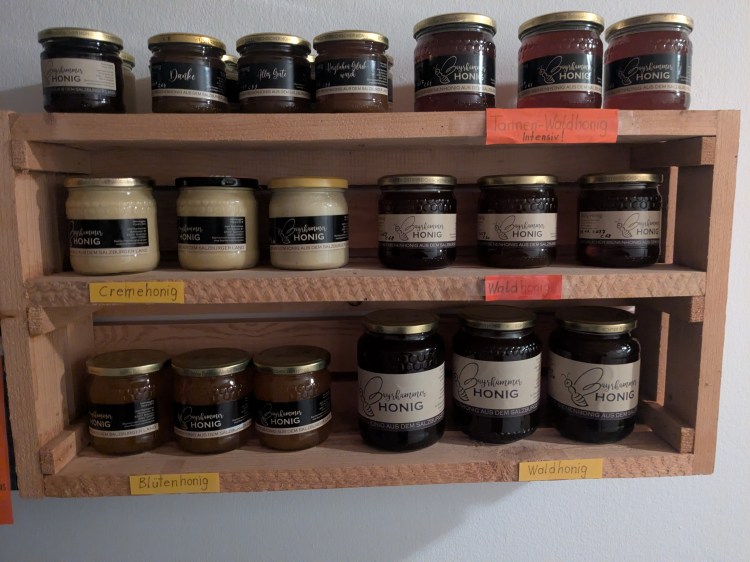
Our family business in Seekirchen near Salzburg produces honey that captures the taste of nature. Harvested by our bees directly from flowering meadows and forests, Bayrhammer honey stands for quality and naturalness. Sustainable beekeeping is close to our hearts and our aim is to deliver honey you can rely on. Take a look around and find out more about the world of bees and the journey of our honey from nature to your breakfast table!
The beekeeper
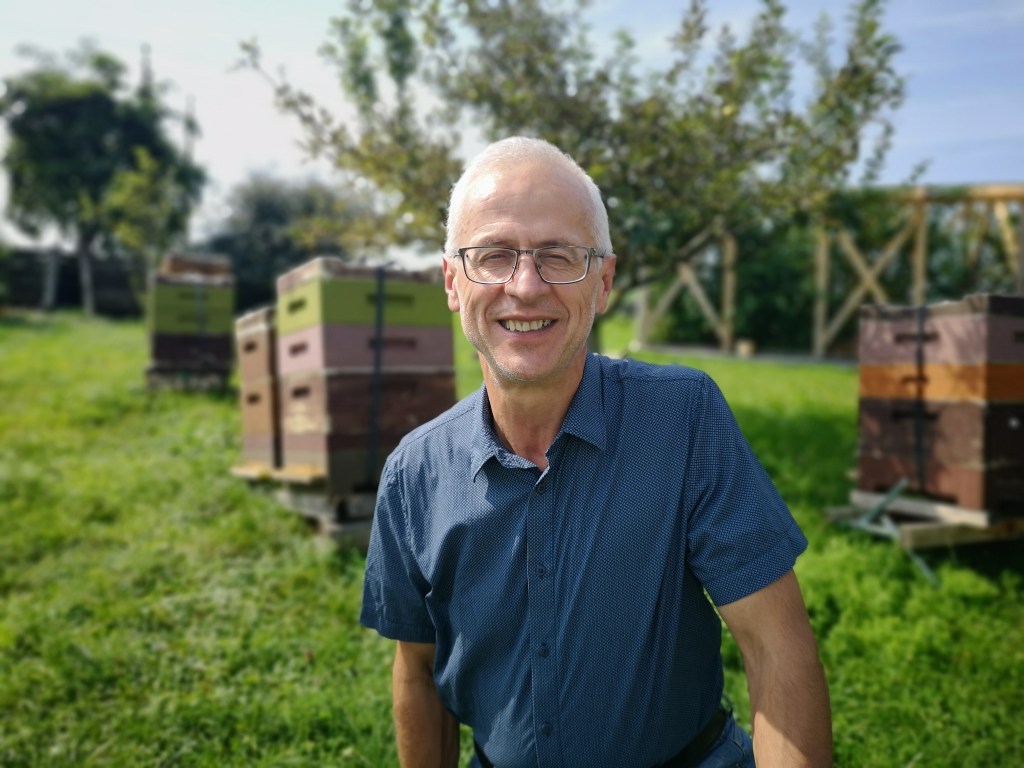
My name is Josef Bayrhammer, I was born in 1957 and I worked full-time with computers. At the same time, I always had the dream of farming alongside my fruit trees. Since I decided to start beekeeping in 2009, I have been fascinated by bee colonies and have never let go. My wife Maresi and my grandson Lukas also help me with the work with the bees and the honey harvest.
Our philosophy
High-quality honey is important to us. However, the well-being of our bee colonies is at least as important to us as honey production, because bees are fascinating creatures that play a central role in the ecosystem. To ensure that bees are and remain healthy, it is important to understand the development of bee colonies in nature and, as beekeepers, to act in harmony with this as far as possible. And: healthy bees are also one of the prerequisites for good honey.
Our bees
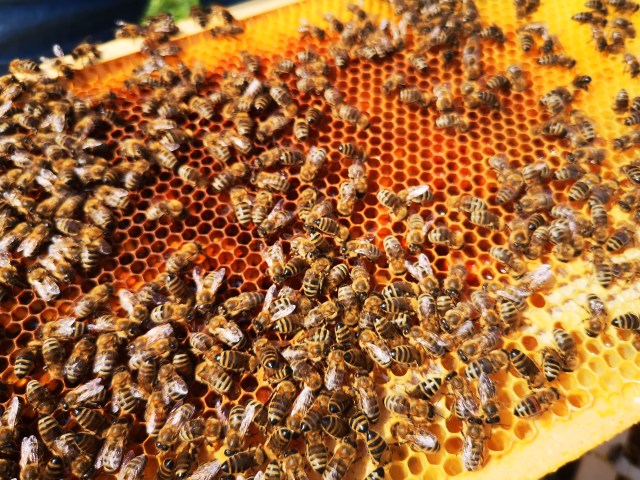
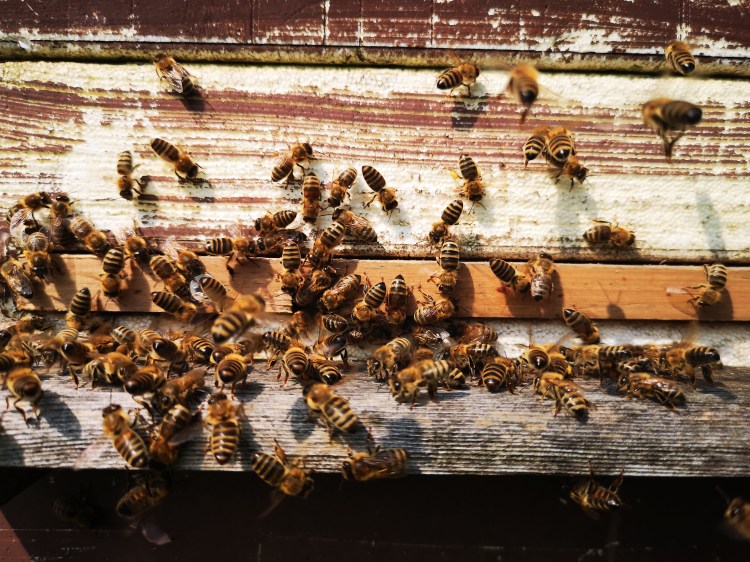
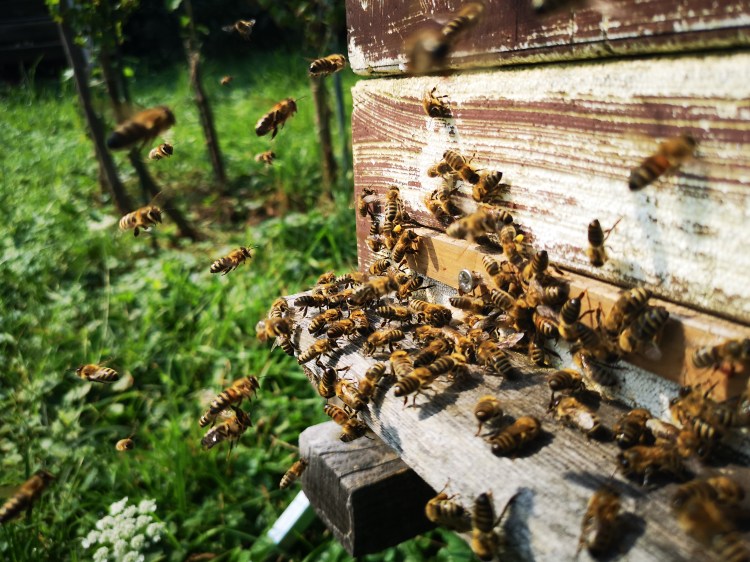
Up to 4 million bees live in our bee colonies. This number fluctuates: In winter there are 5000 per colony – by May each colony grows to more than 50,000 bees. Each hive has a single queen, as well as male bees – known as drones – and female infertile bees, the workers. While the young worker bees keep the hive clean, the older ones collect pollen and nectar, which is processed into honey.
Our locations
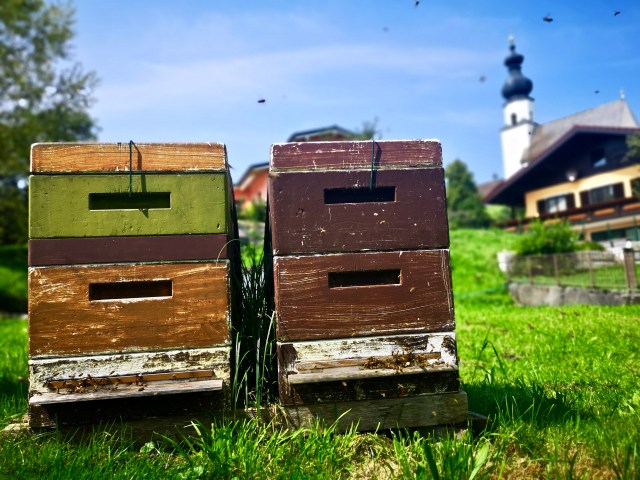
In addition to healthy bees, the right location is the most important prerequisite for high-quality honey. Our bees live in the beautiful countryside of Salzburger Land – far away from monocultures such as rapeseed or corn and in places with a wide variety of trees and flowers. The colonies are located close to nature parks, moors, floodplain landscapes and rustic forests.
Our products

Our honey gets its unique flavor profile from the great diversity of flowers and plants that surround our hives: dandelions and wild roses, marigold, raspberries and many many more.
We have light-colored blossom honey, darker forest blossom honey and creamed honey. The bees collect the nectar for the blossom honey in April and May and process it into honey – this is when we harvest for the first time – and later the bees produce forest blossom honey, which we harvest in July. We process some of the blossom honey into creamed honey. The honey is stirred twice a day for six to ten days – and develops a creamy, silky consistency. We sell our honey in Seekirchen.
From nectar to honey
For half a kilo of honey, a bee would have to fly around the world about twice; for a tablespoon of honey, bees have flown around 3000 kilometers. For one foraging flight, a bee visits around 1000 to 1500 flowers and returns with 0.05 grams of nectar. It passes this on to other workers in the hive, who add additives, extract water and convert it into honey. In this way, more than two kilos of nectar are turned into 500 grams of honey. And this honey lasts forever.

The bee colony

The bee colony consists of a queen and – depending on the season – 5000 to 50,000 workers and up to 8000 drones, i.e. male bees. The queen’s job is to constantly lay new eggs: up to 2000 a day, several times her body weight. The workers take on a wide variety of tasks, from cleaning the honeycomb to feeding the young maggots and producing wax, guarding the entrance, collecting nectar, pollen and water.
Swarming
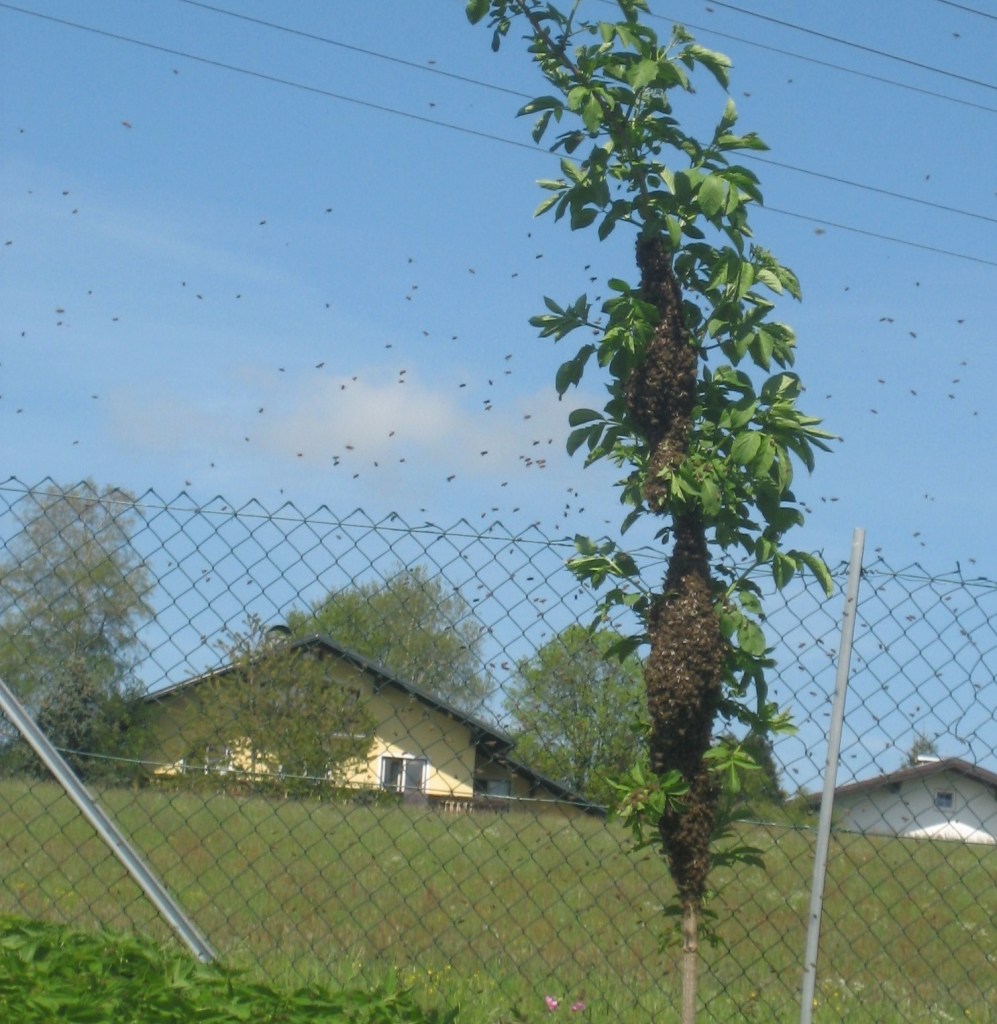
Bee colonies swarm out because they want to multiply by dividing. In this process, some of the bees in a colony leave the hive with a queen and gather in a different place – usually on the branch of a nearby tree. So-called scout bees set off in search of a new home for the new colony. In a decision-making process that was only researched a few years ago (but that would be another exciting story), these scout bees then agree on the most suitable new home – and the swarm takes off.
Contact
Josef Bayrhammer, Beekeeping
Mühlbachstrasse 87, 5201 Seekirchen
Mobile phone: +43 664 1226651 bzw. +43 681 20577293
E-Mail: bayrhammerhonig@gmail.com
Sales of Honey
We sell our honey in Seekirchen, Mühlbachstrasse 87, in Salzburg and Vienna.
We sell:
- Blossom honey: For this purpose, nectar from flowering plants is collected by our older bees near carefully selected locations and converted into honey by the younger bees in the hive. The blossom honey from our bee colonies is free from rape honey, which we regard as a special quality criterion. This honey is usually harvested between the end of May and the beginning of June.
- Creamed honey: We produce this from the blossom honey of our bees.
Blossom honey begins to crystallize relatively quickly and crystallized honey is not desired by most customers. This can be remedied by converting blossom honey into creamed honey. This is done by regular stirring over a period of around six to ten days and breaking up the resulting honey crystals. No additives are added during this process. Creamed honey is therefore still pure blossom honey, but with a transformed consistency. One advantage of creamed honey is that it does not drip from honey bread due to its creamy consistency. - Forest honey, or more precisely honey with a high proportion of forest honey from our bees, is collected from the trees by our older bees in June and converted into honey by the younger bees in the hive. This honey is usually harvested at the beginning of July and has a particularly intense flavor. This honey crystallizes very slowly over months.
Container sizes:
- Blossom honey: 500g or 250g
- Creamed honey: 500g or 250g
- Forest honey: 1kg, 500g or 250g
- There are also 250 gram gift jars with various inscriptions (thank you, all the best, congratulations and sorry) throughout the year. On request, you can also receive 250 gram jars with a blank inscription area in which you can write your individual message.Gift box for honey jars (on advance order)
In the run-up to Christmas, there are also gift jars in the Christmas version:

and gift boxes for honey jars (during Advent or on pre-order)
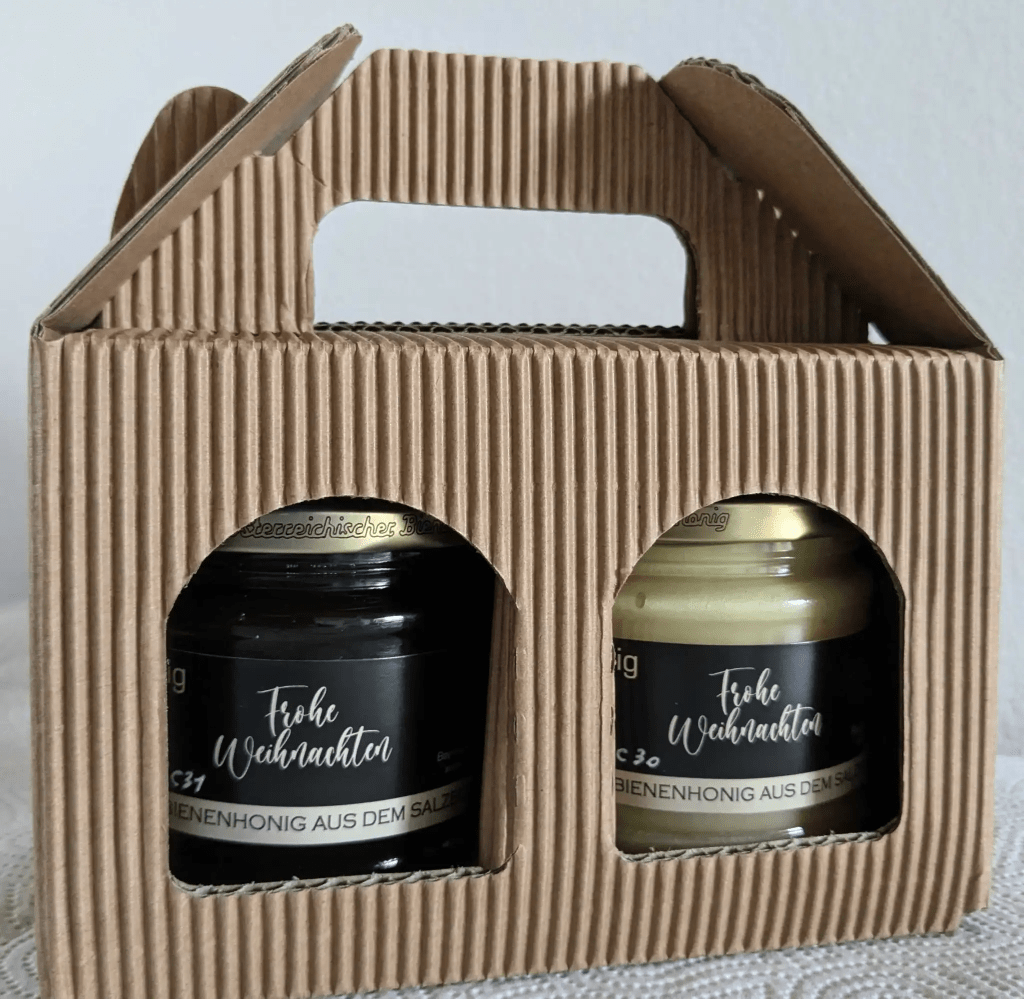
A deposit of € 0.30 will be refunded for the return of undamaged original honey jars.
I have introduced the deposit for honey jars to increase the return rate of honey jars in order to minimize the ecological footprint.
If you are interested, I will be happy to show you around my honey workrooms to give you an insight into our honey production (in German or English)
Sale of queen bees and bee colonies
Have a look at the pedigree of my breeding queens:
https://buckfast-pedigree.eu/de/eingetragene-zuechter/breeder=BAJ
We sell:
- Stand-mated queens: I use the breeding material from my breeding colonies (swarm inertia, honey yield, Varroa resistance) as breeding material. These queens usually have good hump fiber characteristics, but the chance of Varroa resistance is lower, as this characteristic is brought along by the queen, but is not passed on dominantly in the inheritance and the drones with random genetics come into play. The hatched unmated queens are supplemented with bees from the honey chambers of my colonies to form small colonies and complete their nuptial flights at one of my apiaries.
- mated queens: I use the breeding material from my breeding colonies (swarm inertia, honey yield, Varroa resistance) as breeding material. These queens have a high chance of Varroa resistance, as this trait is inherited from the queen and the mating drones. The hatched, unmated queens are supplemented with bees from the honey chambers of my colonies to form small colonies and brought to the mating station of the Upper Austrian Beekeepers‘ Association in Weyer (Varroa resistance) (https://bienenzuchtgruppe.at/drohnen-linienbeschreibung/ ) or Ammergebirge of Buckfast Bavaria (Varroa resistance) (see also: https://www.buckfast-bayern.com/buckfastbiene/belegstellen/ammergauer-alpen-amm/ ) for mating. The young queens can make their nuptial flights at this mating site.
- Small bee colonies/queens in Miniplus (stand-mated or hive-mated) for particularly gentle repopulation to the respective hive size by removing the old queen and placing the Miniplus over the previous frame with newspaper after two hours.
- Young colonies: in the Zadant frame size with 4-5 frames (with mated queen or mating queen)
- Economic colonies: In Zander frames after overwintering (in the season between March and April)
- Economic colonies: In Zadant frames (can also be hung in Dadant frames by extending the upper beams with small screws) after overwintering (with stand-mated queen or mating site queen)
Varroa tolerance breeding
As a result of globalization, a bee pest of Asian bee breeds (Varroa mite) has been brought to Europe from Asia and is also infesting our bee colonies.
In order to prevent the death of many bee colonies, the use of organic acids (formic acid, clover or oxalic acid) is recommended as a permissible control method after the last honey harvest of the year. The use of these acids has a lethal effect on the mite, provided it is not in capped brood, and only causes minor damage to the bee colonies or enables the colonies to survive.
In my opinion, however, the bee colonies suffer from it, I have the impression that these colonies become more susceptible to varroa from generation to generation and that is why I decided years ago to take the alternative approach of selecting and breeding varroa-resistant bee colonies.
To do this, I select bee colonies for queens to be bred according to the aspect of low varroa load, among other criteria, breed new queens from these and bring these queens, each with a small starting colony, to varroa resistance sites where drone colonies selected according to varroa resistance criteria are set up. When the queens fly out to the nuptial flights at this stand, there is a high probability that they will be mated by drones with Varroa-reducing genetics.
In addition, in 2024 I took part in an SDI breeding programme in which artificially inseminated queens in their colonies are infected with approx. 150 Varroa mites and after a few weeks, during the mite count with scientific supervision by the Arista Foundation, it is checked under the microscope to what extent the colony was able to recognize Varroa-infected brood and eliminate the Varroa mites due to the Varroa resistance genetics. The best of these queens then provide the breeding material for the next generation of queens. This SDI breeding took place in 2024 in Weng near Ried im Innkreis in the center of our association near the Hargassner company in Upper Austria.
In 2025, SDI breeding will take place again in Weng near Ried im Innkreis in the center of our association near the Hargassner company and I will again participate with 10 SDI colonies. The best of these queens will then provide the breeding material for the next generations of queens. These SDI colonies are not for sale and will be used exclusively to achieve a corresponding breeding progress of the bee genetics I have bred.
Bee Breeding results:
- In 2024 our best SDI breeding resulted in a colony with 70% Varroa resistance. The test showed that the colony still does have some varroa mites (from other bee colonies), but the mites can’t breed and multiply in this colony.


Interesting links
IMPRESSUM
Josef Bayrhammer Imkerei
Mühlbachstraße 87
5201 Seekirchen
Österreich
Telefon: +43/6212/6463
Mobiltelefon: +43/664/1226651
E-Mail: bayrhammerhonig@gmail.com
Unternehmensgegenstand: Verkauf von Bienenhonig aus eigener Produktion
Gerichtsstand: Landesgericht Salzburg
 BayrhammerHonig